Jahandar Shokri, a board member of the Shokri Industrial Group, strongly criticized the treatment of exporters and the delay in implementing the mechanism for settling foreign exchange obligations at a meeting of Kermanshah’s economic stakeholders with national and provincial officials. He said producers who were once described as “frontline economic warriors” are now facing travel bans, legal cases, and accusations of being “economic offenders,” even though, according to him, these same producers have generated foreign currency for the country without receiving government-supplied foreign exchange, despite sanctions, the energy crisis, and export restrictions.
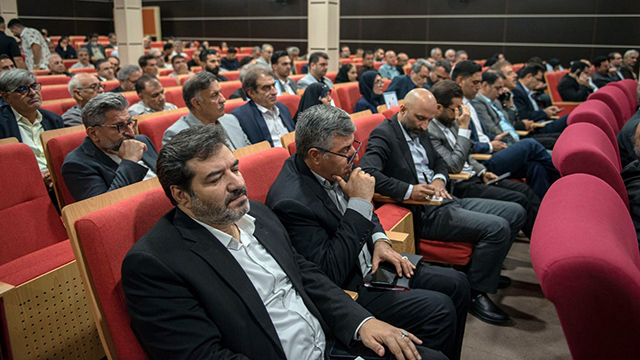
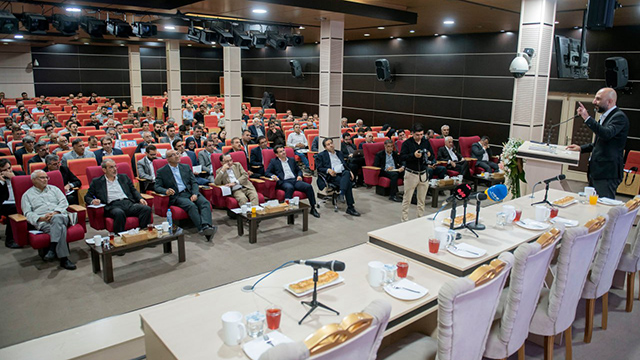
A consultative meeting of Kermanshah’s economic stakeholders, focused on expanding Iran-Iraq trade, was held in Kermanshah on Wednesday, September 9, 2026, coinciding with the visit of an Iran-Iraq economic delegation to the province.
The meeting was held as part of efforts to expand Iran-Iraq trade relations, with the aim of examining export barriers, the challenges facing economic stakeholders, the potential of Kermanshah’s border crossings, and ways to increase trade between the two countries.
The program and related meetings during the economic delegation’s visit were attended by Manouchehr Habibi, Governor of Kermanshah; Abdolreza Mesri, Representative of the people of Kermanshah in the Islamic Consultative Assembly; Yahya Ale Eshaq, Chairman of the Iran-Iraq Joint Chamber of Commerce; Hassan Danaeifar, Secretary of the Headquarters for the Development of Iran’s Economic Relations with Iraq and Syria; Keyvan Kashefi, a senior official of the Iran Chamber of Commerce; as well as officials from the Trade Promotion Organization of Iran, the Chamber of Commerce, the House of Industry and Mining, and a number of provincial economic officials and businesspeople.
The Iran-Iraq economic delegation had arrived in Kermanshah on Tuesday afternoon, September 8. The delegation’s agenda included examining barriers to trade development, holding specialized meetings and an export development working group, and engaging in discussions with the province’s economic stakeholders.
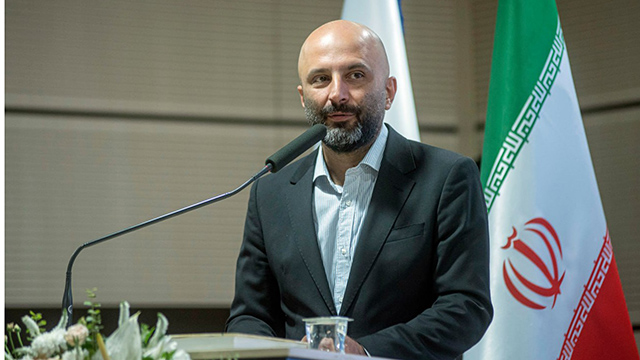
At the meeting, Jahandar Shokri, entrepreneur and board member of the Shokri Industrial Group, devoted one of the session’s most outspoken speeches to the challenges facing producers and exporters.
“Exporters Have Not Received Government-Supplied Foreign Currency”
Shokri began his remarks by expressing appreciation for producers, entrepreneurs, traders, and businesspeople who, he said, have remained committed to their work despite economic pressures and have continued to work to sustain production and preserve Iran’s standing in global markets.
He said that in recent years, Iranian producers have managed, despite sanctions, to export their products not only to Iraq, Afghanistan, Turkey, and neighboring countries, but also to European markets and more distant destinations, helping establish several industrial brands from Kermanshah Province in international markets.
However, the main focus of Shokri’s remarks was his criticism of the way exporters’ foreign exchange obligations are handled.
Addressing the officials and media representatives present, he stressed:
“An exporter has not received foreign currency from the government system. I repeat: exporters have not received government-supplied foreign currency at a preferential rate or any special allocation. An exporter has sold their own goods and brought the resulting foreign currency into the country.”
Shokri called for a distinction to be made between exporters who operated without using government foreign exchange resources and others, noting that repeated changes in regulations and the percentages required for settling foreign exchange obligations over different years have left economic stakeholders facing obligations under conditions that differed from those in effect when their exports took place.
“Yesterday We Were Economic Warriors; Today We Are Economic Offenders” The strongest part of Shokri’s remarks came when he addressed the legal consequences of cases related to the settlement of foreign exchange obligations.
He said that individuals who had been recognized in previous years as “economic warriors” and frontline forces of the country’s economy are now facing travel bans and legal action because of problems arising from foreign exchange regulations.
Shokri said:
“Today, we have become economic offenders. This is extremely difficult for us. We have our reputation and dignity. At one time, we were called the frontline economic warriors of the country; today, we are being asked to explain why we did not bring in foreign currency.”
He stressed that an exporter who has not received preferential foreign currency or low-cost government resources and has produced and exported goods using their own capital should not be treated as an economic offender without taking into account changes in regulations over different years.
“Open the Portal: Let Us Be Neither Economic Offenders nor Thieves of This Country”
Shokri then referred to the directive concerning the settlement of part of the foreign exchange obligations from 2018 to 2021 and the possibility of resolving them through payment in rials, criticizing the delay in putting the mechanism into operation.
He said that despite the passage of around 50 days since the mechanism was officially announced, the required portal has still not been activated by the Central Bank, leaving producers who want to resolve the status of their cases in limbo.
Shokri said bluntly:
“The directive has been issued, but after around 50 days, the Central Bank has still not opened the portal. Please, open this portal and let us resolve our status. Let us be neither economic offenders nor thieves of this country. We are economic warriors; by God, we are producing.”
He said that in recent days and weeks, he had personally followed up on the issue in Tehran through the Chamber of Commerce and called for the immediate implementation of the mechanism that the government itself had designed to resolve the matter.
How Can a CEO Under a Travel Ban Develop Export Markets?
The Shokri Industrial Group board member then directly addressed the issue of travel bans and legal action against managers of production facilities, asking the officials present to halt such measures until the cases covered by the new directive are resolved.
He said:
“CEOs have been banned from leaving the country. Someone who wants to pursue production and market expansion is himself under a travel ban. On the other hand, arrest warrants are also being issued—even though the case has not yet gone to court and a judge has not even reviewed it. Why?”
Shokri warned that continuing such a situation would not merely put pressure on an individual manager, but could directly threaten factory operations and the employment associated with them.
Addressing the officials present, he said:
“Stop this. Production must not be halted. CEOs are under stress, but they are standing firm and continuing to work.”
We Circumvent Sanctions; Do Not Block the Way at Home
In another part of his remarks, Shokri offered a candid account of the difficulties faced by Iranian producers operating under sanctions.
He said economic stakeholders have sometimes been forced to find unconventional and extremely difficult ways to maintain foreign markets and obtain the equipment required by their factories.
He said:
“If they do not allow us to enter from that side, we find a way around it. If necessary, we wear local clothing and go; we go under another name. If they do not allow us to bring in a component we need, we find a way to bring it in in our luggage.”
His message to domestic policymakers was clear: a producer who has accepted such high costs and risks to overcome foreign sanctions should not also face domestic barriers that make it even more difficult to continue operating.
“We Have No Electricity, We Have No Gas; Even If We Build Power Plants, Where Will We Get the Gas?”
The energy crisis was another major focus of Shokri’s criticism.
He said that in recent years, industries had been encouraged to build power plants and secure independent energy supplies to cope with electricity restrictions, but gas shortages have now emerged as another major obstacle.
Shokri asked:
“They say we do not have enough gas. Fine, let us build power plants; but if we do not have gas, what are we supposed to do with the power plants? Where are we going to get the gas? Even if we want to use alternative fuels, we have problems securing fuel as well.”
According to him, Iranian producers are currently facing challenges on several fronts simultaneously: sanctions and external restrictions, domestic foreign exchange regulations and export difficulties, as well as electricity and gas imbalances that have deprived industries of the ability to plan for stable production.
From 42% of Iran’s I-Beam Exports to Zero
To illustrate the impact of these conditions on Kermanshah’s steel industry, Shokri referred to the experience of the Shokri Industrial Group, a private group with operations spanning various segments of the steel value chain in western Iran, from raw materials and direct reduced iron (DRI) to billets, I-beams, rebar, and other steel sections.
He said the group was the country’s second-largest I-beam exporter in 2023, accounting for 42% of Iran’s I-beam exports—a share that, according to him, has now fallen to zero.
Shokri identified two decisive factors behind this decline: first, the expansion of exports through rented commercial cards and the resulting change in competitive conditions in export markets; and second, severe energy restrictions that have reduced the production and export capacity of industrial facilities.
For an industrial group that has made substantial investments over the years to complete the steel value chain in Kermanshah, the decline from a 42% share of the country’s I-beam exports to zero is, in Shokri’s view, more than just a statistic. It is an indication of the consequences of policies that could take away export markets painstakingly developed by Iranian producers over many years.
“We Are Standing Firm; Just Let Us Work”
Despite the critical and outspoken tone of his remarks, Shokri emphasized at the end that producers have no intention of backing down.
He said: “We are standing firm, we are committed to the job, we are working, and we will not give up.”
He emphasized that industrial stakeholders continue to consider it their duty to generate production, employment, and foreign currency earnings for the country. However, they expect the government and relevant authorities to facilitate their operations rather than create additional obstacles.
Shokri’s requests to the officials present were clear: the immediate activation of the mechanism for settling foreign exchange obligations; suspension of legal action and travel bans against managers until the status of their cases is clarified; greater stability in export regulations; and the development of a practical solution to the energy crisis facing industries.
The steel industry leader’s outspoken remarks ultimately placed a fundamental question before policymakers:
Why should a producer who has manufactured products under sanctions without receiving government-supplied foreign currency, fought to enter foreign markets, struggled to import the equipment needed for its factory, coped with electricity and gas shortages, and generated foreign currency for the country now have to fight to prove that they are not an “economic offender”?
 |
 |